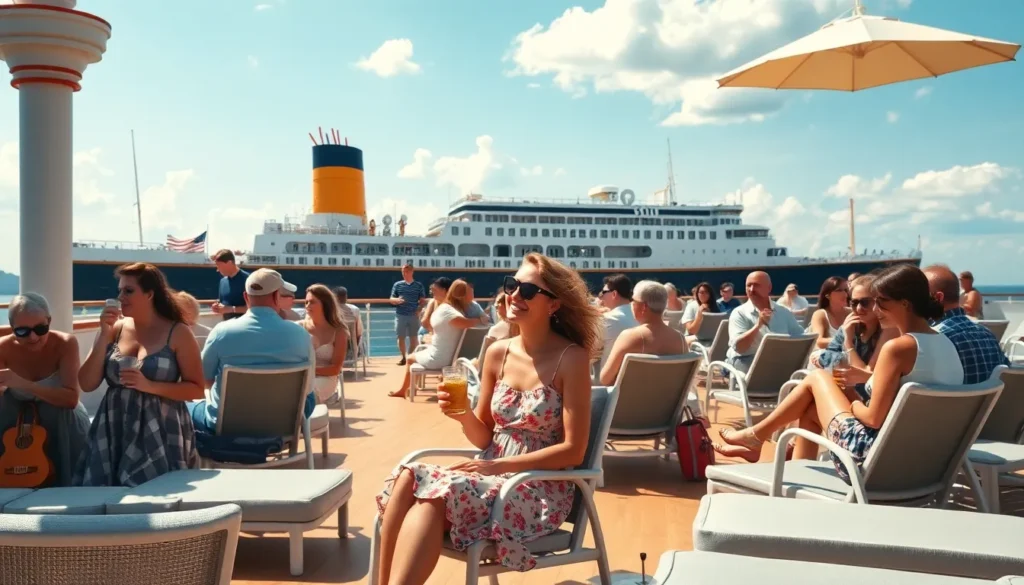

Imagine standing on a sunny deck, drink in hand, gazing at the majestic Titanic as it floats alongside a modern cruise ship. It’s a scene that sparks curiosity and a chuckle or two. One ship, a legendary icon of luxury and tragedy, and the other, a floating city of endless buffets and entertainment. Who wouldn’t want to know how these two maritime marvels stack up against each other?
Overview of Titanic and Cruise Ships
Titanic, launched in 1912, symbolized opulence. This iconic vessel featured lavish interiors and advanced technology for its time. Passengers experienced unmatched elegance as they traveled across the Atlantic.
Modern cruise ships, however, prioritize entertainment and leisure. Designed with numerous amenities, these ships cater to diverse activities. Dining options range from casual eateries to gourmet restaurants, and entertainment offerings include theaters and water parks.
In terms of size, cruise ships dwarf Titanic. Titanic measured 882 feet in length, while current cruise ships can exceed 1,100 feet. Capacity also differs significantly; Titanic accommodated around 2,200 passengers, while some cruise ships now host over 6,000 people.
Safety features represent another key difference. Titanic faced tragedy due to insufficient lifeboats and underestimating icebergs. Current cruise ships comply with strict maritime safety regulations and boast advanced navigation systems to prevent such disasters.
Cost comparisons speak volumes too. Titanic cost approximately $7.5 million in 1912, equating to about $200 million today. In contrast, the average modern cruise ship costs around $1 billion, reflecting advancements in technology and luxury.
Each vessel represents distinct eras in maritime history. Titanic embodies an age of exploration and ambition, while cruise ships reflect contemporary desires for entertainment and variety at sea.
Historical Significance of the Titanic
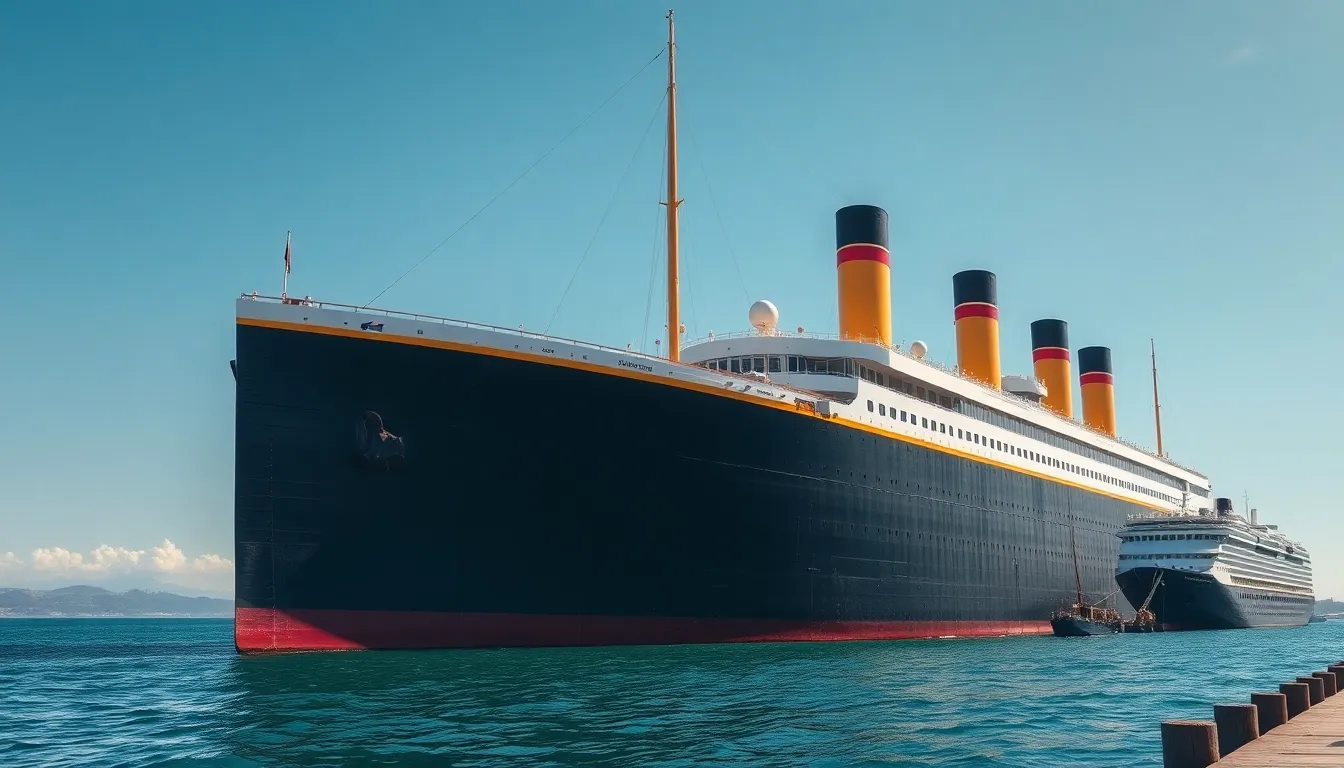
Titanic serves as a pivotal symbol in maritime history, reflecting both grandeur and tragedy.
Construction and Launch
Constructed by Harland & Wolff in Belfast, Titanic showcased exceptional craftsmanship. Engineers designed the vessel with luxurious interiors, aiming to redefine ocean travel in 1912. Measuring 882 feet, it featured advanced technologies for its era, including a sophisticated marconi system for communication. With over 15,000 workers involved, construction took approximately two years. On May 31, 1911, Titanic was launched to great fanfare, garnering immense public attention. Crowds gathered to witness this marvel of engineering, marking a significant milestone in shipbuilding.
The Maiden Voyage
Titanic embarked on her maiden voyage on April 10, 1912, from Southampton, England. Passengers included some of the wealthiest individuals of the time, drawn by her reputation for luxury. The voyage promised opulence, with lavish dining and elegant accommodations. Titanic made stops at Cherbourg and Queenstown before heading to New York City. Initially, excitement filled the air, but tragedy awaited. On April 14, 1912, the ship collided with an iceberg, leading to catastrophic consequences. This tragic event changed maritime safety regulations, leaving a lasting impact on the industry.
Comparison Between Titanic and Modern Cruise Ships
Titanic and modern cruise ships present a fascinating study in contrasts, demonstrating how maritime travel evolved over the decades.
Size and Capacity
Titanic measured 882 feet in length and had a capacity of around 2,200 passengers. Modern cruise ships dwarf this, often exceeding 1,100 feet and capable of hosting more than 6,000 guests. The growth in size allows contemporary ships to accommodate larger crowds while offering diverse experiences. Not only do modern vessels transport more passengers, but they also utilize space more efficiently, integrating numerous amenities that were once unimaginable. The increase in size and capacity reflects changing consumer demands for more choices while traveling at sea.
Amenities and Luxuries
Titanic epitomized luxury in its era with grand dining rooms and opulent suites. Modern cruise ships, however, leave little to be desired, featuring a plethora of amenities like theaters, water parks, and multiple dining venues. Passengers on current ships enjoy casual eateries alongside gourmet restaurants, catering to diverse tastes. Innovations in entertainment create experiences unmatched by Titanic, which only offered limited leisure options. With spas, rock-climbing walls, and even virtual reality games, today’s cruise ships emphasize leisure and fun. These advancements highlight shifts in passenger expectations and experiences at sea, illustrating a clear difference in luxury standards.
Safety Features and Regulations
Safety features and regulations vastly differ between the Titanic and modern cruise ships. Innovations and lessons learned from past tragedies shape today’s maritime practices.
Titanic’s Safety Measures
Titanic’s safety measures were considered advanced for its time but ultimately inadequate. The ship carried only 20 lifeboats, enough for about half of its passengers and crew. Insufficient attention to iceberg warnings contributed to its catastrophic fate on April 14, 1912. Furthermore, lifeboat drills were minimal, and many passengers were unaware of evacuation procedures. The tragedy prompted immediate changes in maritime safety, leading to new lifeboat requirements and rigorous training for crew members.
Modern Cruise Ship Standards
Modern cruise ships prioritize passenger safety through comprehensive regulations and advanced technology. Each vessel must meet stringent International Maritime Organization standards, including mandatory lifeboat capacity for all passengers plus crew. Regular safety drills ensure everyone knows evacuation routes and procedures. Surveillance systems, enhanced communication tools, and advanced hull designs minimize risks during journeys. Modern cruise ships also employ experienced maritime professionals to oversee safety protocols, reflecting a commitment to safer travel on the seas.
Cultural Impact of the Titanic
Titanic’s legacy permeates various aspects of culture, captivating audiences through film, literature, and daily conversations. The vessel’s story continues to resonate, illustrating both grandeur and tragedy.
Film and Literature
Films depicting Titanic’s tragic journey garner immense attention. James Cameron’s 1997 film became a cultural phenomenon, earning eleven Academy Awards and reaching a global audience of over 1.8 billion viewers. Numerous books, including historical accounts and fictional stories, explore the ship’s opulence and catastrophe, enriching public understanding. Titles like “A Night to Remember” detail survivor accounts, adding layers to the narrative. This blend of fact and fiction creates a vibrant tapestry reflecting Titanic’s enduring impact.
Titanic in Popular Culture
References to Titanic frequently appear in popular culture, from memes to songs and merchandise. The phrase “I’m the king of the world!” symbolizes a moment of triumph, echoing through various media. Theme parks and exhibitions dedicated to Titanic further enhance its visibility, offering immersive experiences that attract millions. Events commemorate the ship’s sinking each year, emphasizing its historical significance. Such representations nurture a collective fascination, ensuring Titanic remains a prominent cultural touchstone.
The juxtaposition of Titanic and modern cruise ships reveals a fascinating evolution in maritime travel. Titanic’s legacy as a symbol of luxury and tragedy continues to resonate, serving as a reminder of the past. In contrast, today’s cruise ships prioritize entertainment and safety, reflecting contemporary desires for leisure and adventure at sea.
While Titanic represented an era of ambition and exploration, modern vessels cater to a diverse range of passenger experiences. The advancements in technology and safety regulations ensure that cruising today is not only enjoyable but also secure. As the maritime world continues to evolve, both Titanic and contemporary cruise ships will remain integral to the narrative of sea travel, each representing distinct yet interconnected chapters in history.