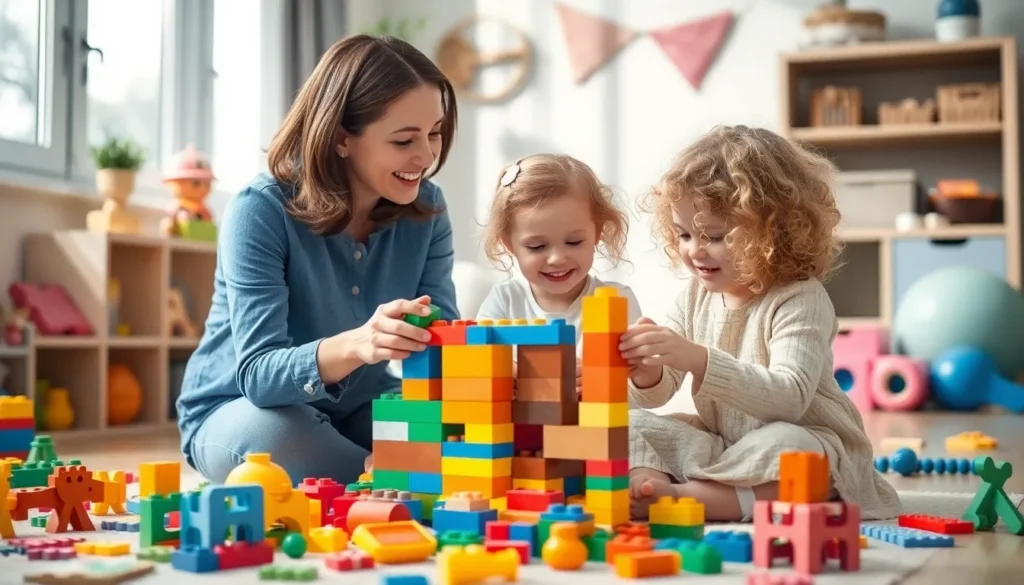

In a world where homeschooling is becoming the norm, parents are on the lookout for creative ways to keep their little scholars engaged. Enter toys—those magical tools that turn learning into play and boredom into excitement. Who knew that a simple block could teach math while doubling as a makeshift fortress during a fierce dragon battle?
Benefits of Toys for Homeschooling
Toys serve as invaluable resources in homeschooling, fostering engagement and enhancing educational experiences. By utilizing various toys, parents create stimulating environments that support learning.
Enhancing Learning Through Play
Learning through play significantly boosts information retention. Toys like building blocks enhance spatial awareness and fine motor skills. Engaging with puzzles can strengthen problem-solving abilities while teaching colors and shapes. Children actively incorporate knowledge into play scenarios, leading to deeper understanding and creativity.
Promoting Critical Thinking Skills
Toys designed for open-ended play encourage children to think critically. Sets that allow for construction, such as LEGO, stimulate exploration and innovation. Board games challenge children to strategize, evaluate options, and anticipate opponents’ moves, enriching cognitive development. Learning through these playful interactions equips children with essential analytical skills, applicable beyond academic settings.
Types of Toys for Homeschooling
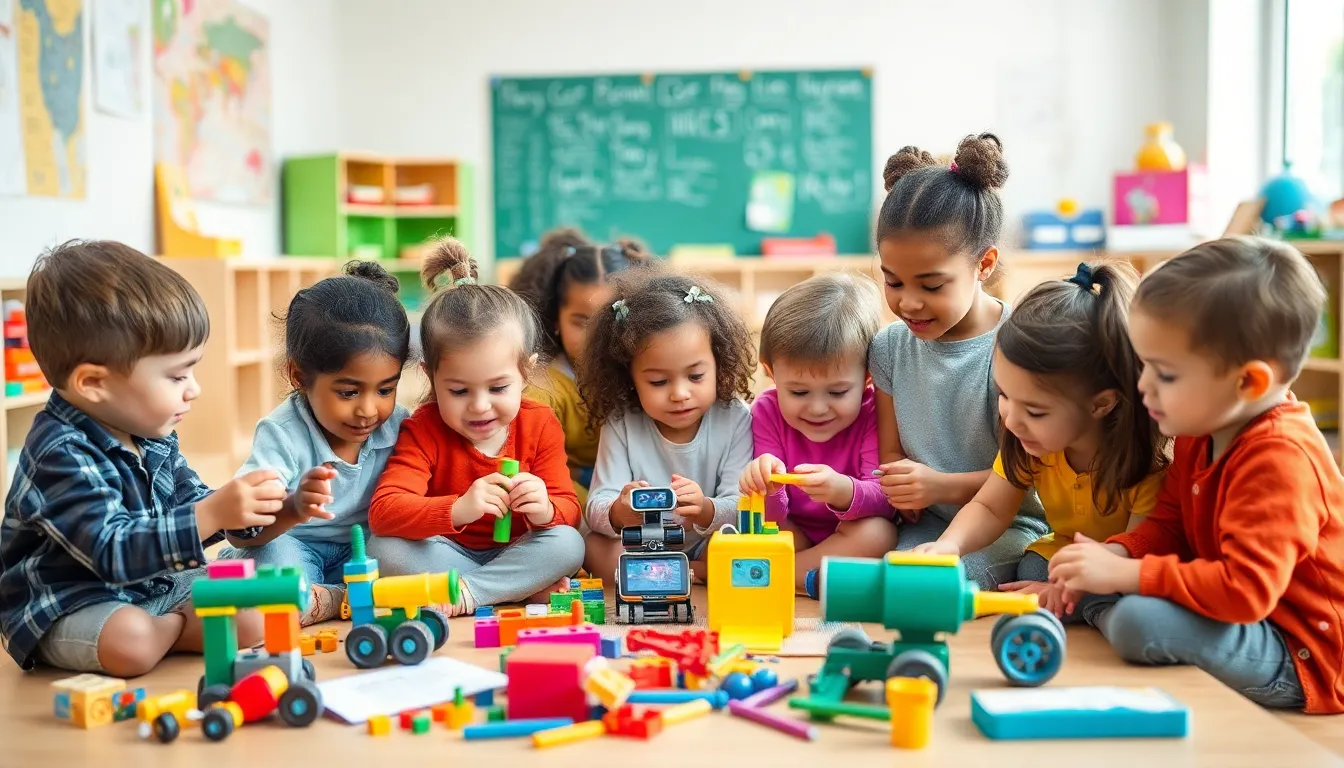
Toys play a vital role in homeschooling, supporting various aspects of learning. They contribute to a well-rounded education by capturing children’s interests while fostering skill development.
Educational Toys
Educational toys enhance learning by focusing on specific subjects. STEM toys encourage skills in science, technology, engineering, and mathematics. For example, coding robots teach programming fundamentals through interactive play. Manipulatives like counting bears and fraction tiles help young learners grasp basic math concepts. Flashcards serve as versatile tools for vocabulary expansion and language skills. Overall, these toys create engaging connections with academic content, promoting retention and understanding.
Creative Toys
Creative toys stimulate imagination and encourage inventive thinking. Art supplies, such as colored pencils and watercolor sets, ignite self-expression while developing fine motor skills. Play-dough and clay offer sensory experiences, allowing children to explore textures and shapes. Building sets, including blocks and construction kits, inspire design concepts and problem-solving capabilities. Dramatic play equipment, like costumes and props, enables children to role-play and interact with social dynamics. Such toys cultivate creativity and allow for exploration beyond conventional learning.
Physical Activity Toys
Physical activity toys promote movement and enhance physical development. Jump ropes and hula hoops encourage coordination and cardiovascular health. Tricycles and scooters offer opportunities for larger muscle group engagement while developing balance and control. Outdoor games, including frisbees and balls, foster teamwork and social skills during play. Active toys help combat sedentary behavior, contributing to overall well-being. These items create dynamic ways for children to learn through active participation in their educational journey.
Tips for Choosing the Right Toys
Selecting toys for homeschooling involves considering various factors that enhance learning experiences. Prioritizing educational value ensures children engage with toys that stimulate their curiosity and promote skill development.
Age-Appropriate Selections
Choosing age-appropriate toys caters to children’s developmental stages. Toys vary in complexity, impacting their ability to engage and learn. Infants benefit from sensory toys while toddlers enjoy building blocks. Preschool-aged children thrive with simple puzzles that develop problem-solving skills. Elementary-aged kids benefit from coding robots that introduce STEM concepts. Selecting toys that align with age ranges maximizes engagement and educational benefits, ensuring each child has access to appropriate challenges.
Multisensory Learning Opportunities
Toys that provide multisensory learning opportunities enhance educational experiences significantly. Incorporating tactile elements engages children’s sense of touch, while visually stimulating toys attract their attention. Toys like art supplies allow for creativity and self-expression, facilitating deeper learning retention. Additionally, musical instruments cultivate auditory skills, enriching the learning environment. Exploring various sensory experiences through play aids in building connections between concepts, ensuring a comprehensive approach to education.
Popular Toy Brands for Homeschooling
Numerous toy brands excel in creating educational toys for homeschooling. Parents often seek trusted brands to ensure quality and engagement in learning.
Overview of Top Brands
LEGO stands out for its versatile building sets that encourage creativity and problem-solving. Melissa & Doug offers a wide range of imaginative play items that foster social and emotional development. VTech designs tech-driven toys that introduce early STEM concepts effectively. Learning Resources specializes in hands-on materials, particularly for mathematics and literacy skills. Additionally, Hape focuses on eco-friendly wooden toys that promote fine motor skills and collaborative play.
Features That Stand Out
Durability contributes to the overall value of quality toys, as they withstand repeated use in learning settings. Safety standards play a critical role; brands like Melissa & Doug prioritize non-toxic materials. Educational content often accompanies the toys; for example, LEGO sets include manuals that inspire creative building challenges. Versatility enhances playtime, allowing children to engage in various activities. Also, many brands offer age-appropriate toys that align precisely with developmental stages, ensuring that children remain challenged and engaged.
Toys play a crucial role in enhancing the homeschooling experience by making learning enjoyable and effective. They not only engage children but also foster essential skills that extend beyond academics. By incorporating educational toys into their curriculum, parents can create dynamic learning environments that stimulate curiosity and critical thinking.
Choosing the right toys tailored to children’s developmental needs ensures that learning remains relevant and impactful. With a variety of options available, from STEM-focused toys to creative play items, parents have the tools to nurture their children’s growth. Ultimately, the right toys can transform homeschooling into an enriching adventure that prepares children for future challenges.