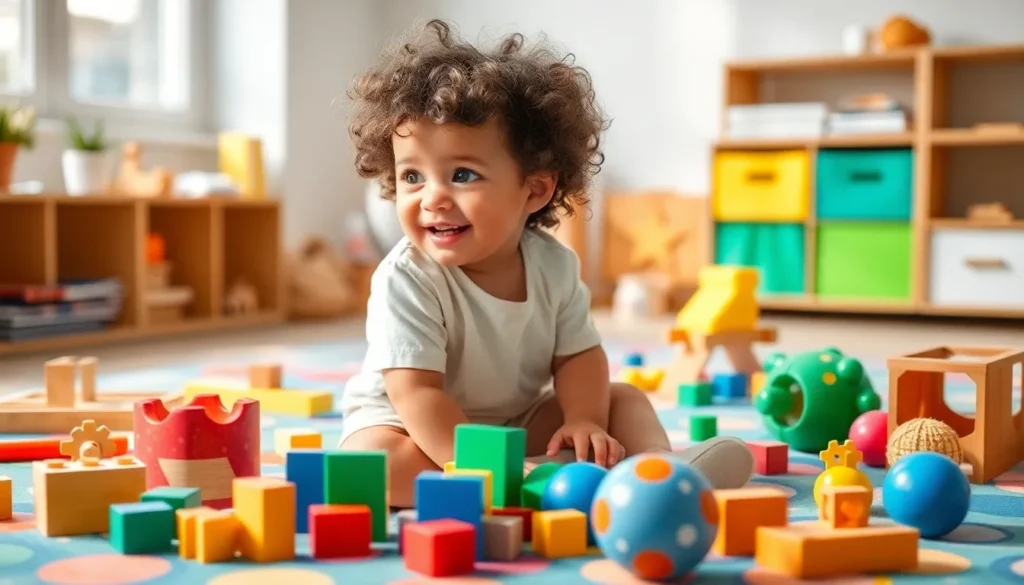

When it comes to toys, parents often find themselves in a maze of choices that can feel overwhelming. Enter Montessori toys, the superheroes of the playroom. These gems aren’t just colorful distractions; they’re designed to spark curiosity and promote learning through play. Imagine a toy that not only entertains but also nurtures your child’s development—sounds like a win-win, right?
Benefits of Montessori Toys
Montessori toys offer unique advantages that enhance child development. Parents and caregivers recognize the importance of selecting toys that support growth, making Montessori toys a valuable choice.
Development of Critical Thinking Skills
Montessori toys encourage problem-solving by promoting exploration and experimentation. Children engage with materials that require logical thinking and reasoning. Building blocks or sorting games present challenges that demand focus and concentration. As kids interact with these toys, they develop mathematical concepts and spatial awareness. Observing their environment becomes a natural part of learning. With each activity, they learn to think independently and address challenges creatively.
Encouragement of Imagination and Creativity
Montessori toys foster imaginative play by allowing children to create their narratives. Open-ended toys like wooden figures or craft materials give children endless possibilities. Kids can construct their scenarios, enhancing their storytelling abilities. Engaging in role-playing triggers curiosity and deepens understanding of the world around them. Creative expression flourishes as children experiment with different scenarios and ideas. Each play session becomes an opportunity for self-discovery and innovation.
Types of Montessori Toys
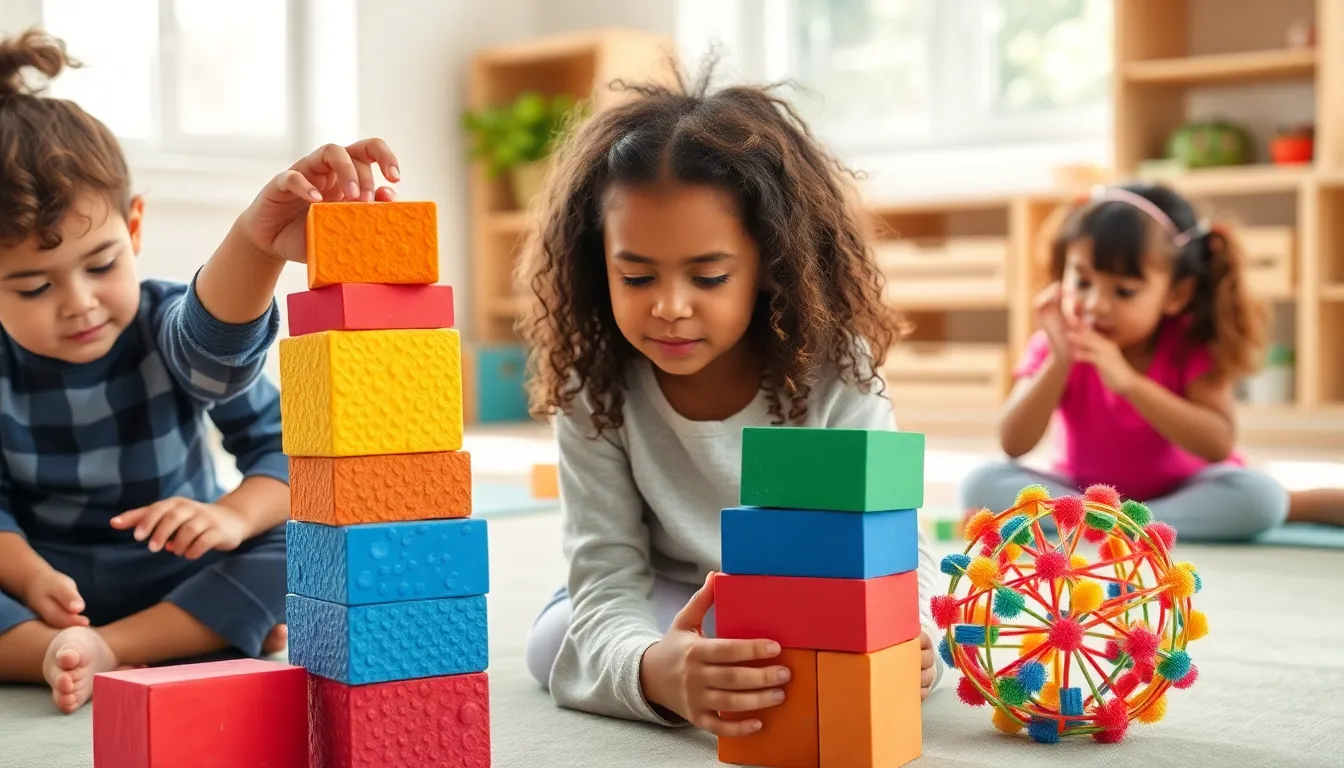
Montessori toys come in various types, each designed to enhance specific aspects of child development. These toys focus on encouraging active engagement and exploration.
Sensory Toys
Sensory toys play a crucial role in stimulating children’s senses. These toys often include textures, sounds, and bright colors that attract attention and promote exploration. Items like sensory balls and textured blocks engage tactile experiences. They aid in developing fine motor skills as children grasp and manipulate different surfaces. While sensory experiences can calm children, they also enhance cognitive development. Parents appreciate how these toys often help kids learn about cause and effect.
Construction and Building Toys
Construction and building toys foster creativity and critical thinking. These toys include building blocks, magnetic tiles, and construction sets that allow children to create structures and designs. Kids develop spatial awareness and problem-solving skills as they experiment with balance and stability. Engaging with these toys encourages open-ended play, letting children express their thoughts and ideas. Moreover, collaboration often occurs when children build together, enhancing social skills. Parents notice an increase in confidence as children see their creations take shape.
How Montessori Toys Enhance Learning
Montessori toys play a significant role in promoting effective learning. Each toy encourages exploration and hands-on engagement, making the process of learning both enjoyable and impactful.
Hands-On Learning Experience
Hands-on learning experiences create deeper connections with concepts. Interactions with tactile materials enhance understanding in a way that passive learning cannot. Children manipulate objects, such as building blocks and sorting games, which reinforces mathematical skills and spatial relationships. Critical thinking develops naturally as they experiment with different configurations and possibilities. Engaging with toys allows for experimentation, fostering a sense of ownership over the learning process. Excitement builds as they discover cause and effect through sensory-rich activities. Mastery of skills emerges as they practice repeatedly, solidifying knowledge through practice.
Foster Independence and Decision Making
Independence and decision-making skills flourish when children interact with Montessori toys. These toys offer choices that empower kids to make decisions during play. Engaging with construction and building toys inspires creativity, prompting children to decide how they want their structures to look. As kids face challenges, they learn to evaluate options and overcome obstacles independently. Social interactions increase as they collaborate with peers, further enhancing their communication skills. Autonomy in learning encourages self-confidence, making children more willing to tackle new challenges. Through unstructured play, kids experience freedom, developing essential life skills for future success.
Tips for Choosing Montessori Toys
Selecting Montessori toys involves considerations to ensure they suit individual developmental needs. Prioritizing age appropriateness is critical.
Age Appropriateness
Toys must align with a child’s developmental stage. For infants, choose sensory toys that promote exploration and fine motor skills. Toddlers benefit from building blocks that enhance creativity and problem-solving. Preschoolers can handle more complex materials like puzzles or role-playing sets, fostering collaborative play. Parents should always verify product age recommendations on packaging. Age-appropriate toys ensure children engage with materials that challenge their abilities without causing frustration.
Quality and Safety Considerations
Quality is essential in selecting Montessori toys. Look for products made from natural materials like wood, which provide durability and a tactile experience. Ensure toys are free from harmful chemicals or small parts that pose choking hazards. Safety certifications from organizations like ASTM or EN71 add reassurance regarding product safety. Investing in high-quality toys enhances longevity, decreasing waste and promoting sustainable practices. Parents should also inspect items for any sharp edges that could harm children during play. Prioritizing safety and quality ensures a positive and enriching play experience.
Choosing Montessori toys is a decision that can significantly impact a child’s development. These toys do more than entertain; they promote essential skills like problem-solving and creativity. By engaging with thoughtfully designed materials, children explore their world and build confidence in their abilities.
Montessori toys also encourage independence and critical thinking, allowing kids to make choices and learn through hands-on experiences. With a focus on quality and safety, parents can feel assured that they’re providing enriching play opportunities. Ultimately, selecting Montessori toys lays a strong foundation for lifelong learning and personal growth.